
SwasthyaFlow
SwasthyaFlow is a speculative product design case study exploring how India’s public healthcare system can transition from walk-in chaos to an appointment-first, structured patient flow model.
The project focuses on:
Reducing wait-time uncertainty
Improving doctor utilization
Enabling continuity of care
Designing for low-digital-literacy users
Building scalable public infrastructure
Insight
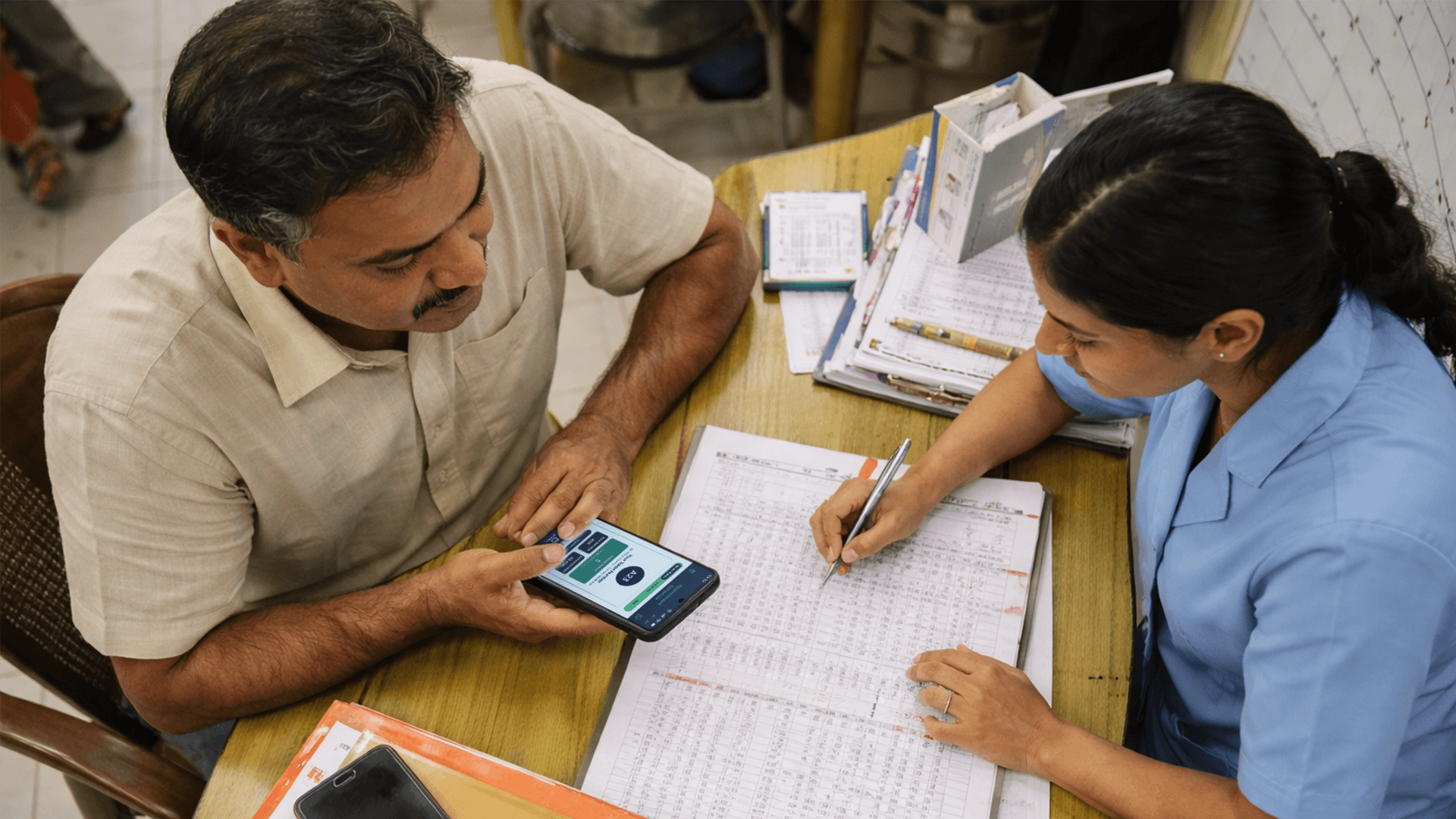
Through behavioral and systems analysis, three key insights emerged:
Predictability is more valuable than speed for patients.
Structured inflow improves consultation quality more than increasing doctor count.
Continuity (follow-ups, previous doctor visibility) reduces long-term system strain.
Public healthcare inefficiency is largely a flow-management issue, not a capacity issue.
Strategy
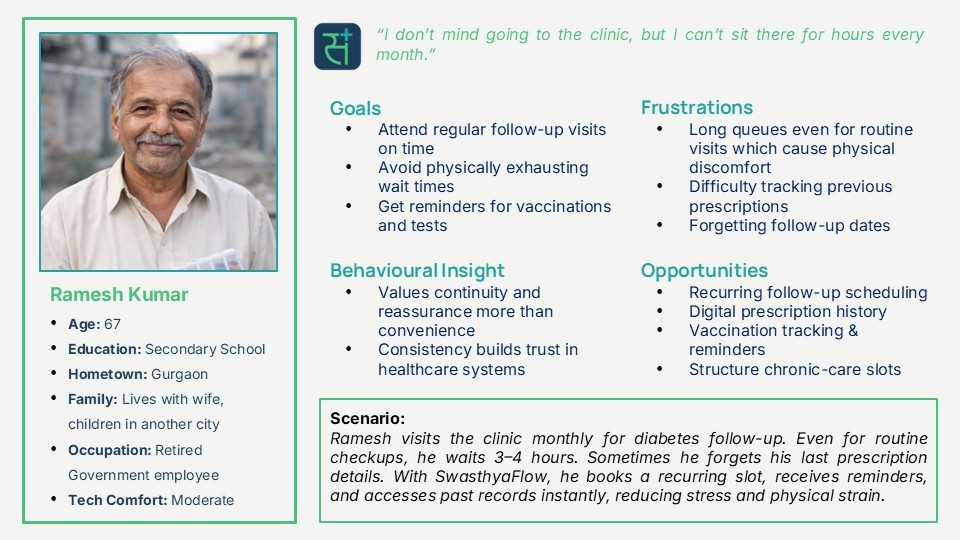
Shift from a token-based walk-in system to a slot-based, appointment-first infrastructure layer.
The strategy included:
Department-first booking to reflect problem-first thinking
Time-slot capping per hour
Real-time queue transparency
Doctor-controlled availability
Follow-up classification (new / recurring / second opinion)
Overdue follow-up tracking
Design principles:
Low cognitive load
Infrastructure-aware UX
Role-based entry
Scalable design system
Structure
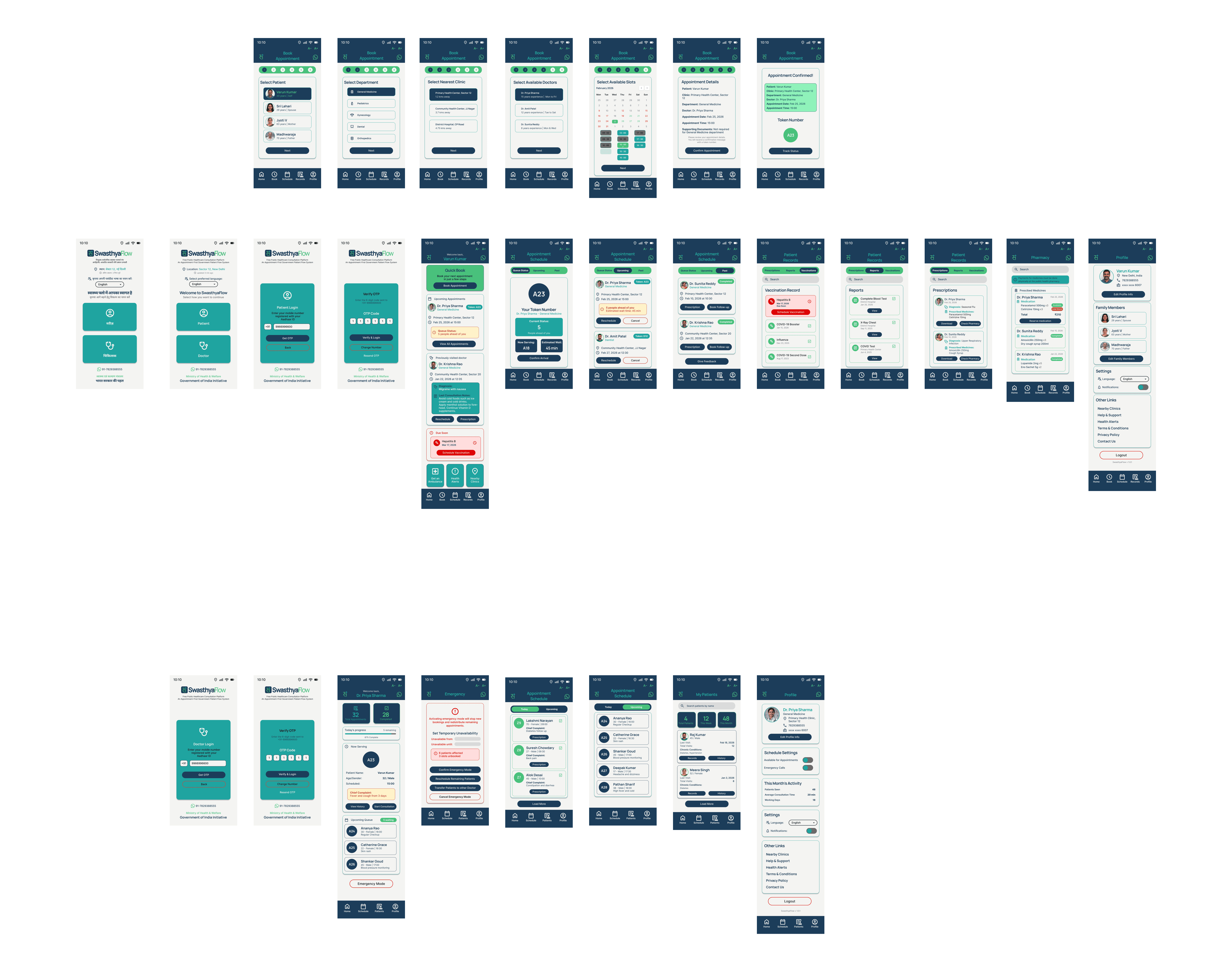
The system architecture consists of:
Patient Layer
OTP login
City selection
Appointment booking
Queue tracking
Records & prescriptions
Reminders
Doctor Layer
Daily slot configuration
Real-time queue visibility
Patient history preview
Overdue follow-up tracking
System Layer
Slot allocation logic
No-show auto-release
High-risk tagging
Drug stock visibility
Basic facility-level KPI tracking
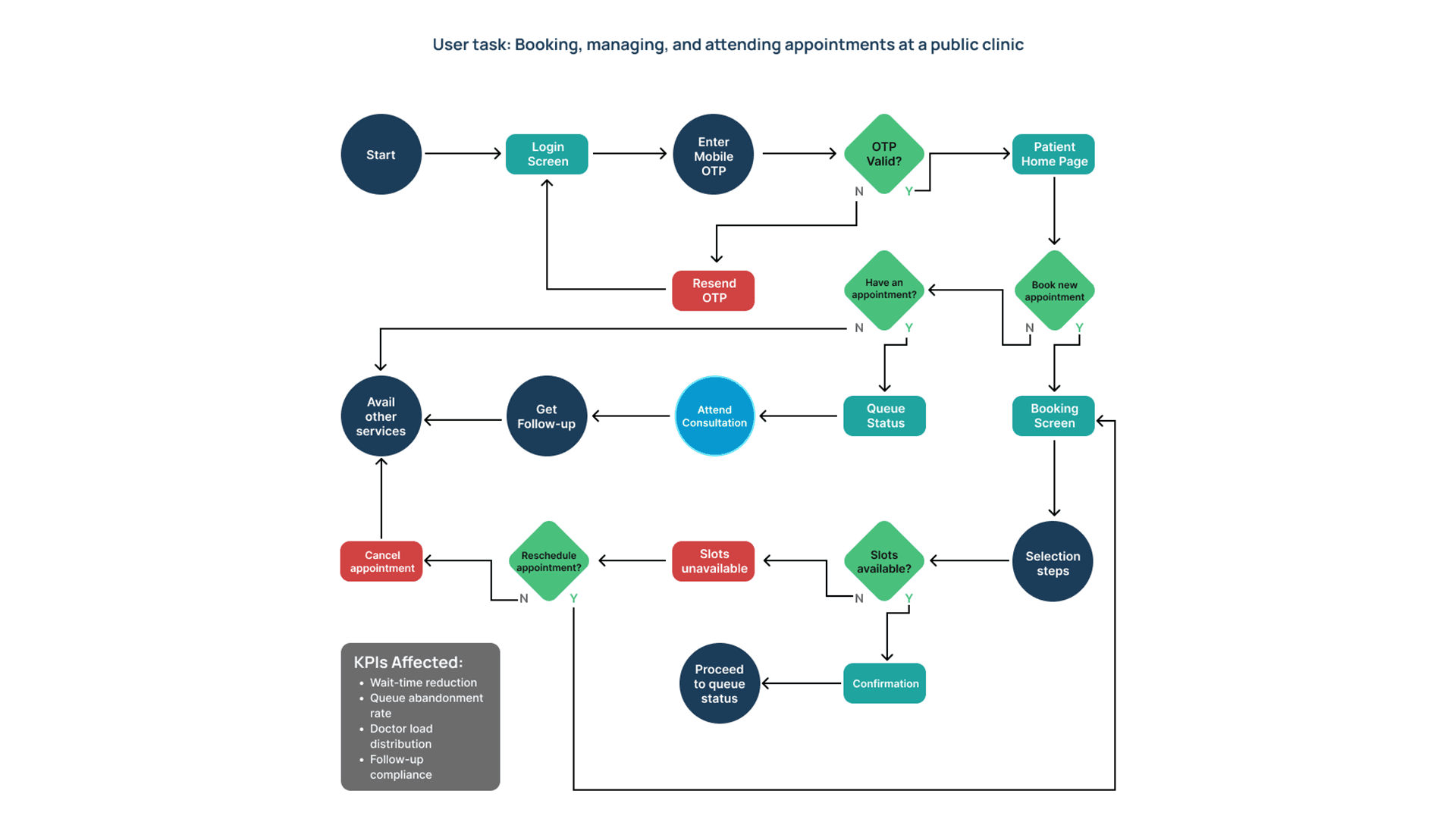
Primary user flow:
Login → Home → Select Department → Select Hospital → Select Doctor → Select Time → Confirm → Track Queue → Attend Consultation → Follow-up.
Decisions
Key product decisions and trade-offs:
OTP login over full account creation to reduce friction
Department-first flow to reduce cognitive overload
Appointment type classification to improve triage
Doctor-controlled daily scheduling for operational flexibility
Excluded teleconsultation in MVP to focus on core flow control
Limited doctor profile details to prevent choice overload
These decisions prioritized adoption, scalability, and operational realism.
Validation
Usability testing and iterative reviews surfaced:
Need for city selection
Need for previous doctor visibility
Importance of reminders
Requirement for missed-token logic
Value of drug stock transparency
Doctor flexibility in emergency situations
Refinements were prioritized based on impact to core KPIs:
Wait-time reduction
Doctor utilization
Follow-up adherence
Queue abandonment rate
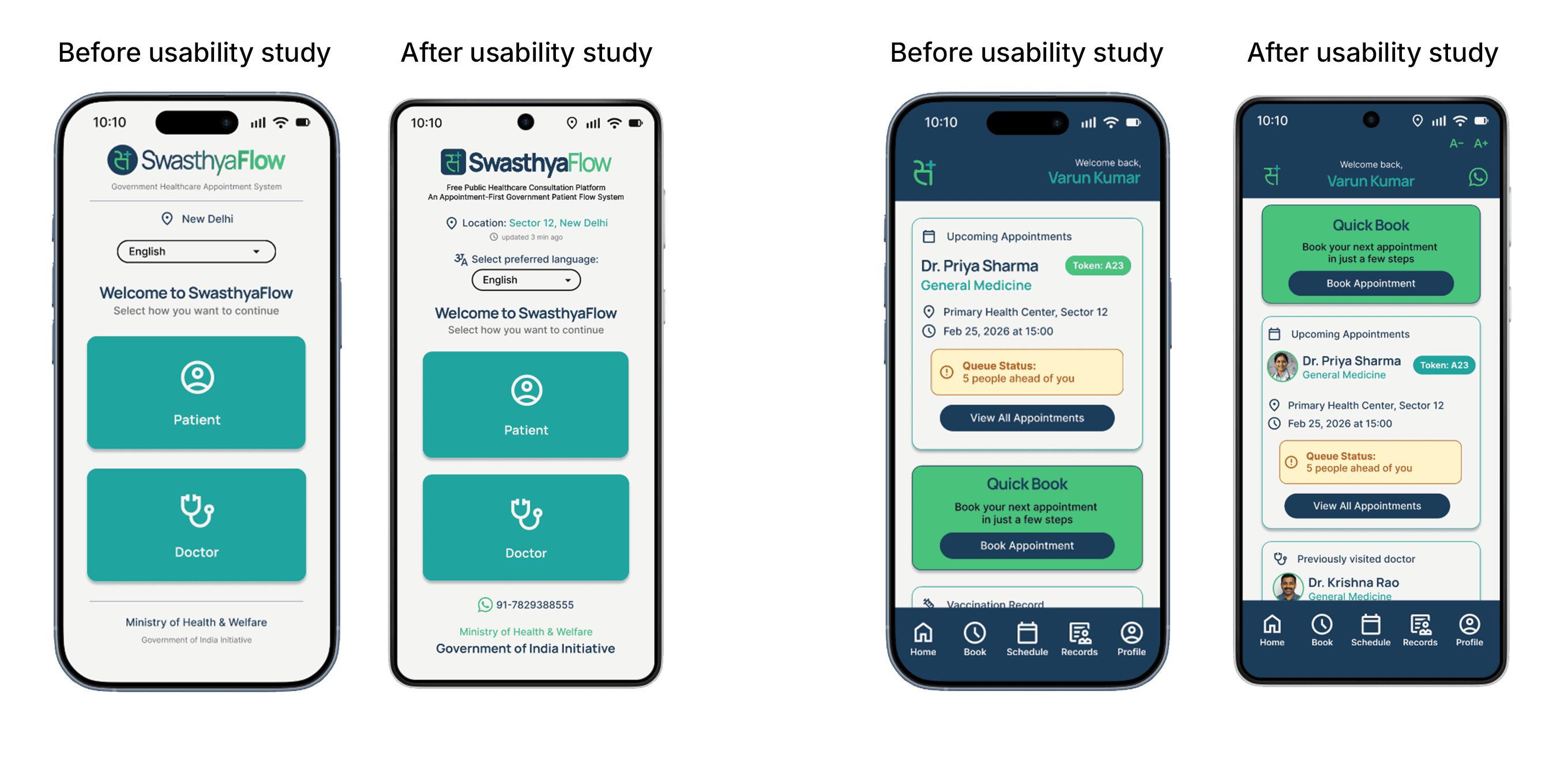
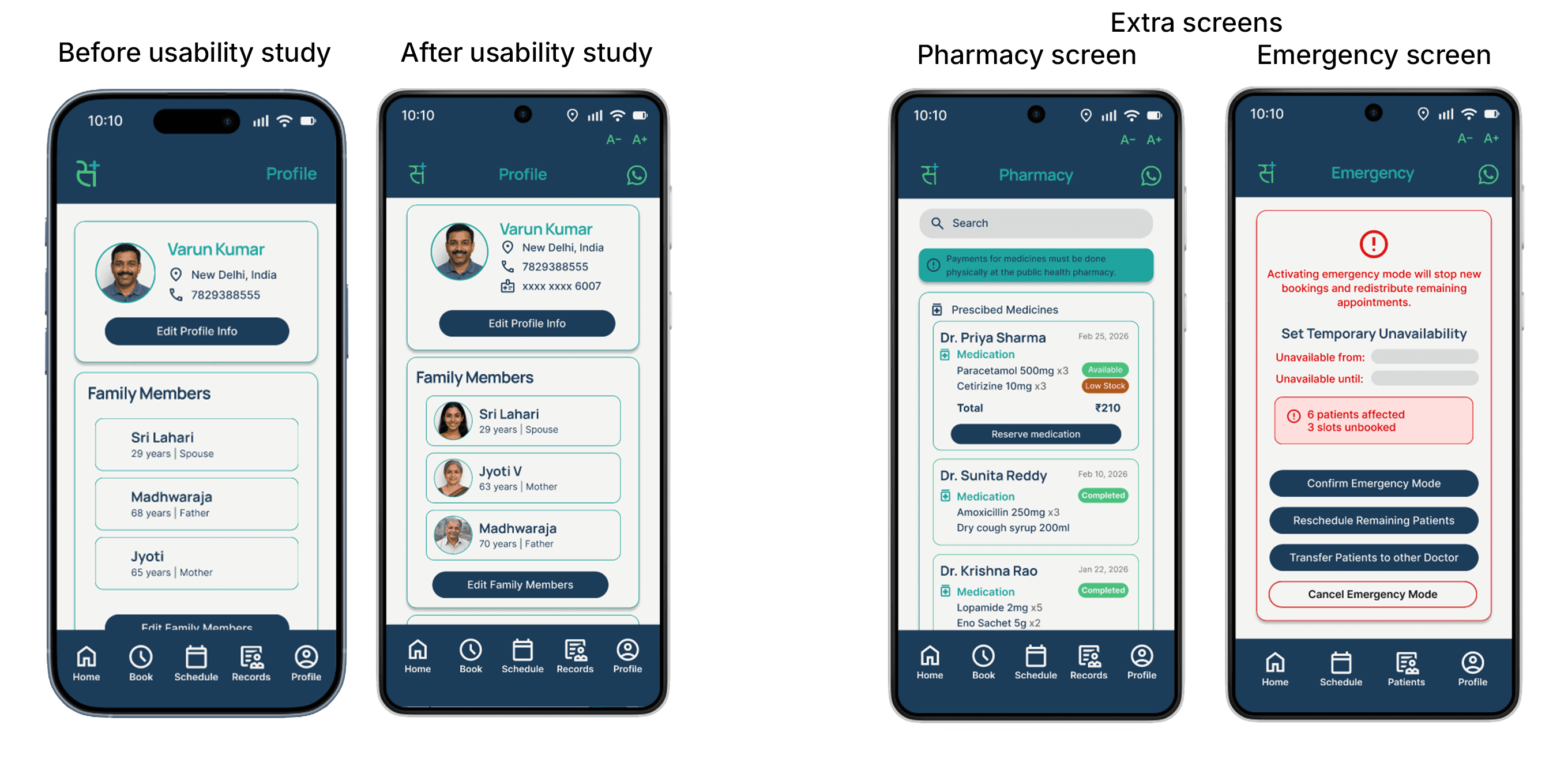
Final Solution
The final prototype delivers:
Structured time-slot booking
Real-time queue tracking
Appointment-type classification
Follow-up reminders
Doctor-side daily scheduling control
Overdue patient tracking
Drug stock indicator
High-risk tagging
Supported by a scalable design system and culturally relevant branding.
The identity reflects:
Modern public health
Indian-first accessibility
Government-aligned simplicity
Impact
Projected impact if implemented at scale:
40–60% reduction in average wait time
25–30% improvement in doctor utilization
Reduction in overcrowding incidents
Increased chronic-care follow-up adherence
Improved operational predictability in OPDs
The design connects user experience directly to infrastructure efficiency.
Reflection
This project evolved from a booking interface into an exploration of public healthcare operations.
Key learnings:
Designing for public systems requires constraint awareness.
Simplicity must align with operational logic.
Failure states (emergencies, doctor delays) define real-world robustness.
Adoption depends as much on doctor flexibility as patient usability.
Future exploration:
Insurance & government scheme integration
Teleconsultation expansion
Community health worker integration
SwasthyaFlow demonstrates how product design can restructure public systems.