
Image-to-3D reconstruction
An internal initiative to explore scalable 3D asset creation for furniture ASINs using limited input imagery. The goal was to reconstruct a high-fidelity 3D model from static PDP images and validate feasibility for catalog expansion.
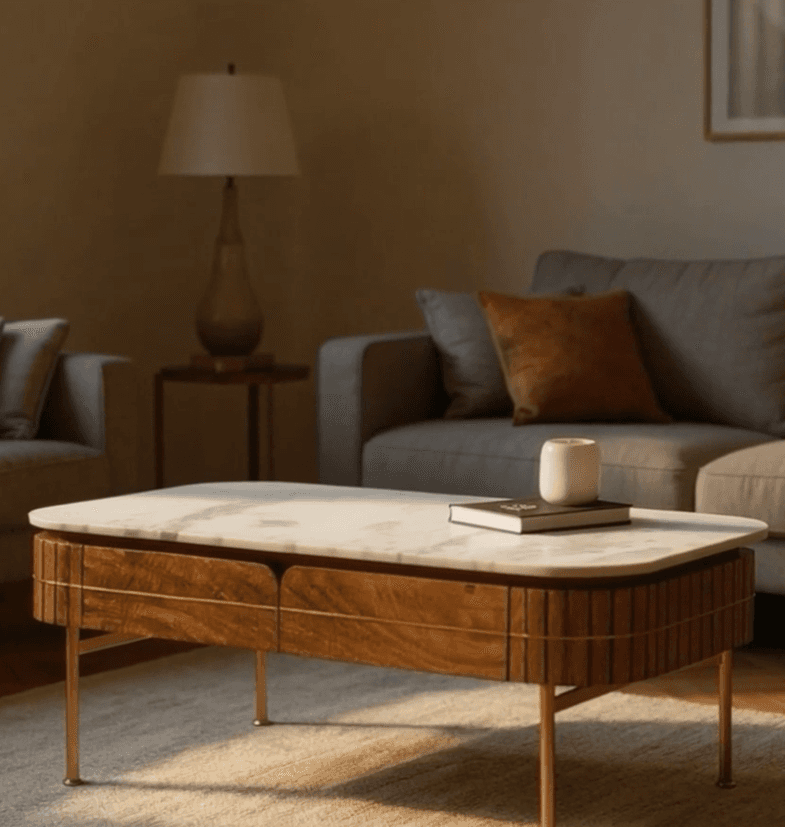
Insight
Furniture has predictable geometric logic:
Symmetry patterns
Drawer alignment rules
Standardized leg proportions
Repeating wood panel segmentation
By breaking down products into modular design rules, reconstruction becomes systematic rather than artistic guesswork.
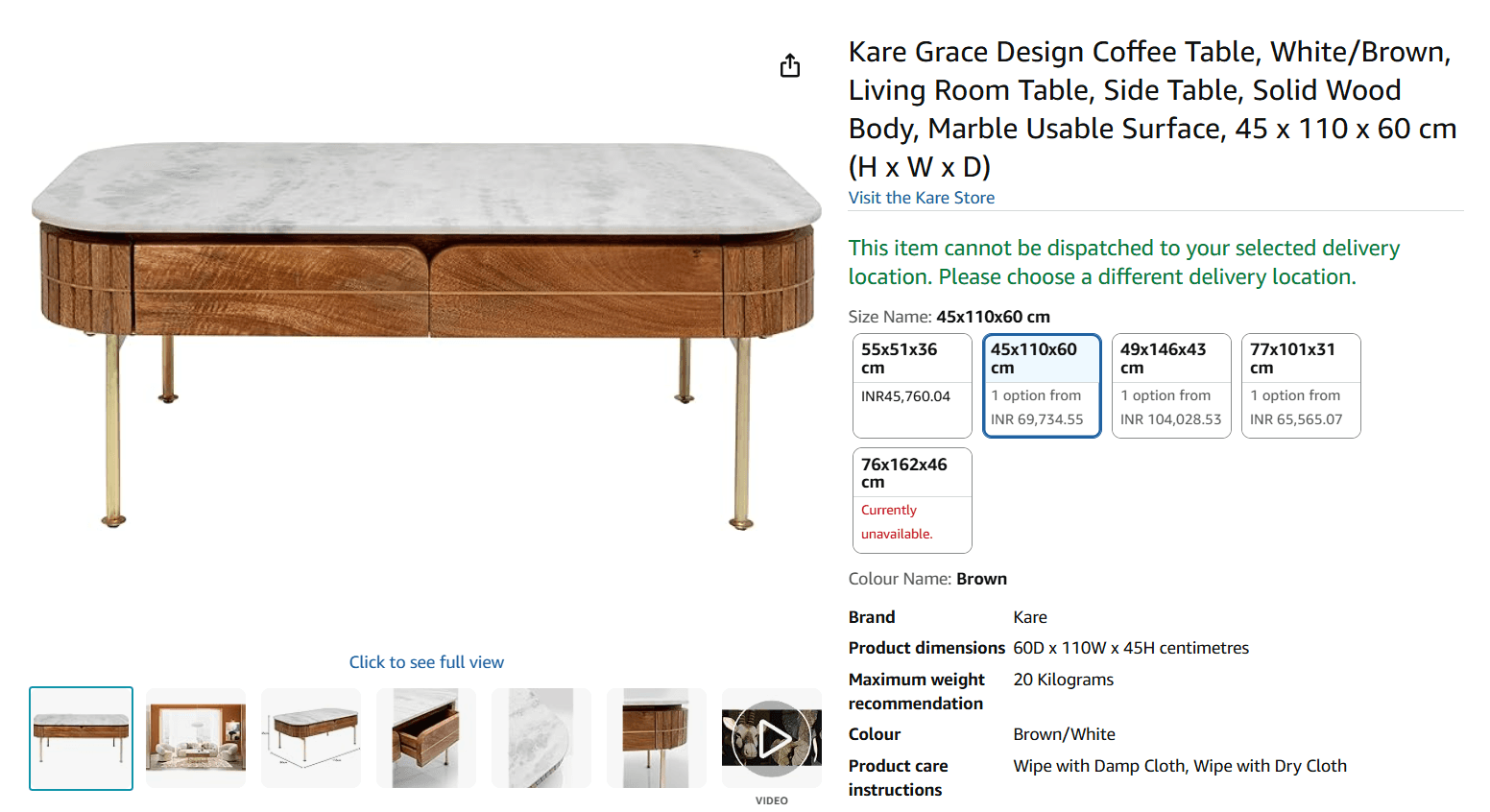
Strategy
Extract measurable references (dimensions listed on PDP).
Reverse engineer proportional scaling.
Identify geometric repetition and mirroring.
Separate materials into reconstruction layers:
Wood body
Marble slab
Metal legs
Build clean UV strategy for texture fidelity.
Structure
Phase 1 – Visual Deconstruction
Analyzed silhouette
Identified curvature radii
Extracted thickness assumptions from shadowing
Phase 2 – Modeling
Maya blockout → refinement
Drawer depth inference
Clean topology for GLB export
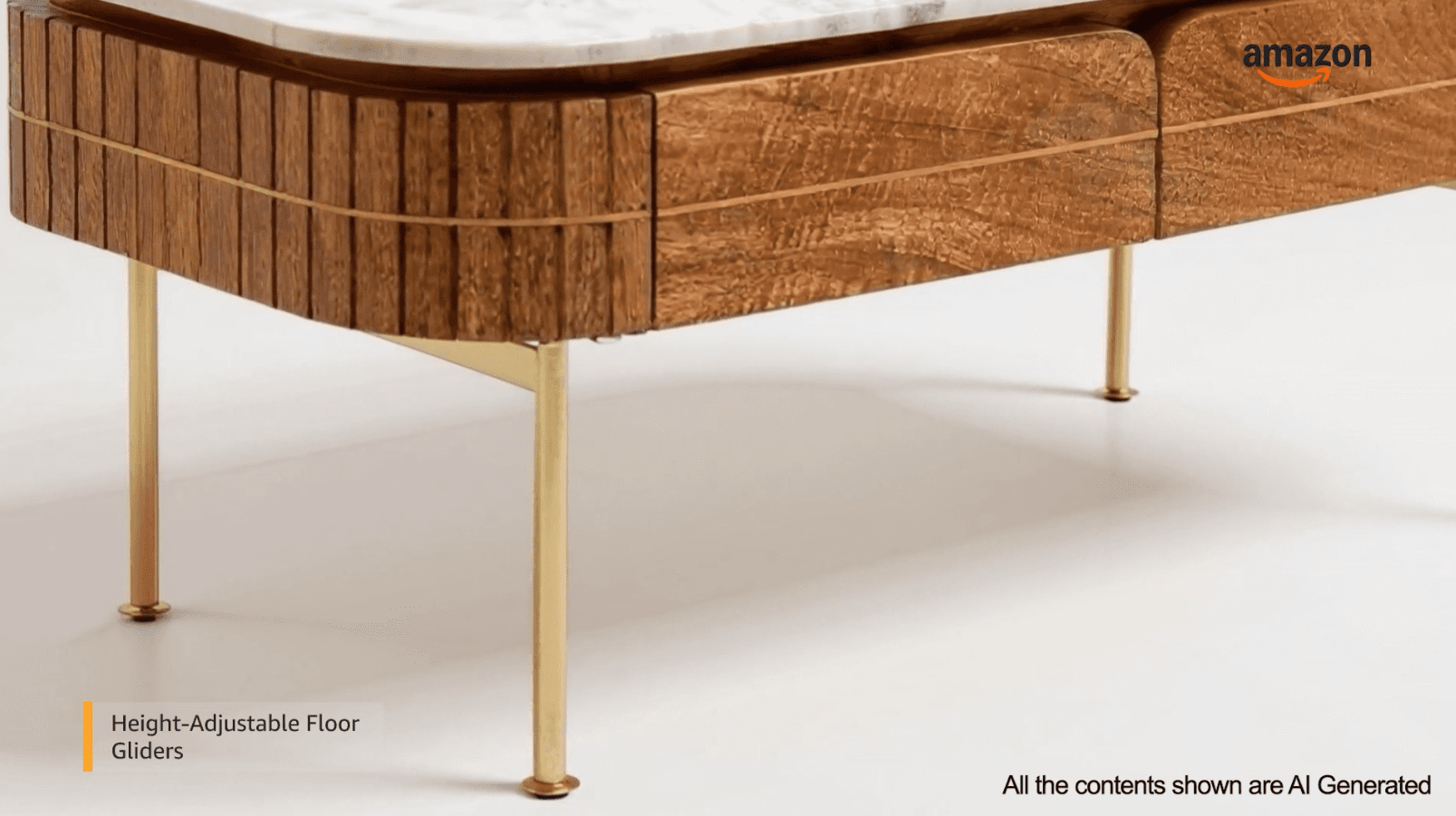
Phase 3 – Material Recreation
Procedural wood grain tuning
Marble shader balancing
Brass roughness calibration
Phase 4 – Optimization
Single UV layout strategy
Real-time shading validation
Decisions
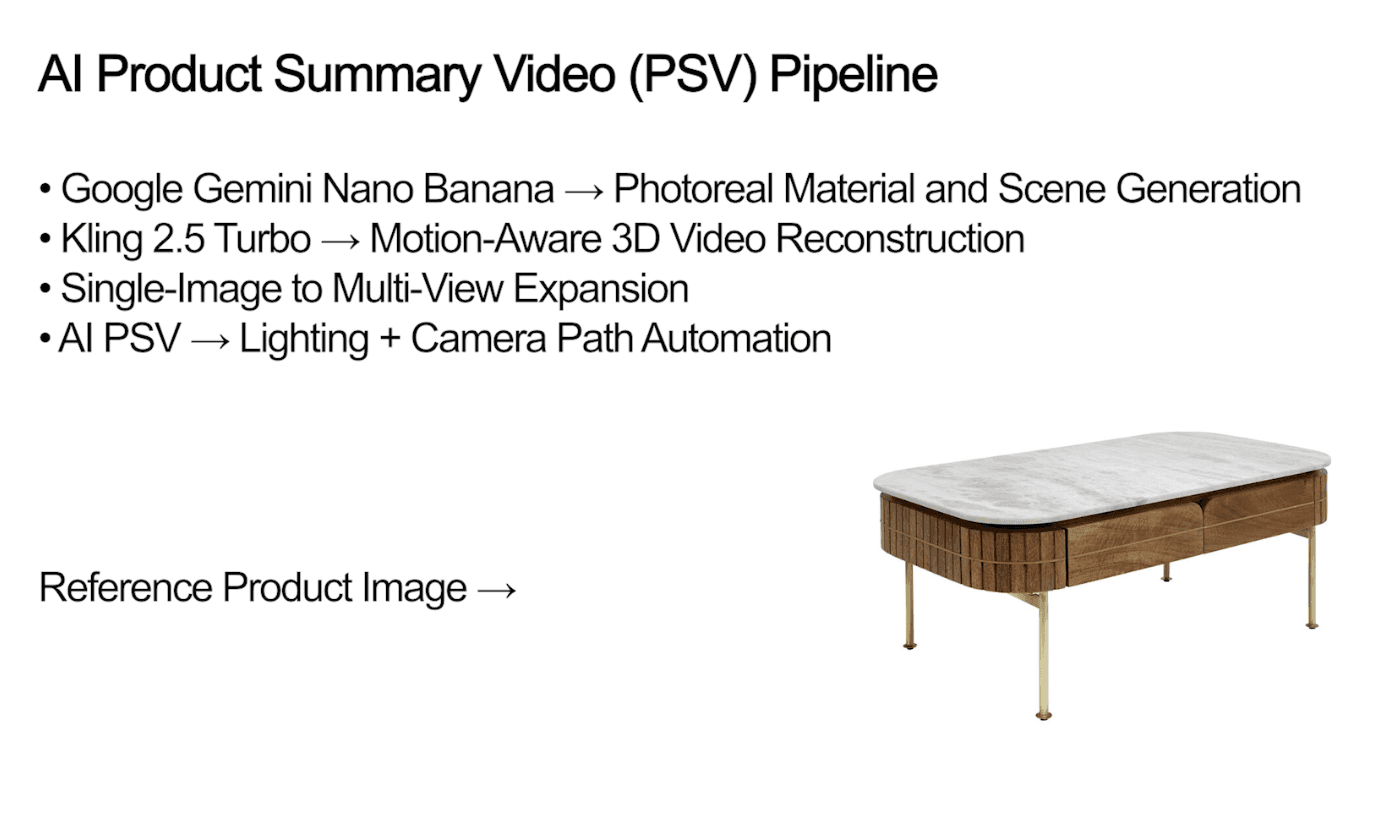
Chose reconstruction over generative AI hallucination.
Prioritized structural accuracy over hyper-detail.
Maintained neutral studio lighting for realism.
Kept polygon count optimized for real-time rendering.
Validation
Cross-checked proportions against PDP dimensions.
Compared silhouette overlays with original images.
Tested in real-time viewer environment.
Verified material realism under neutral lighting.

Final Solution
A fully reconstructed, retail-ready 3D furniture asset derived entirely from static e-commerce imagery — optimized for interactive use and scalable reproduction.
Impact
Demonstrated feasibility of scalable furniture 3D onboarding.
Provided framework for image-based reconstruction pipeline.
Supported Amazon’s long-term 3D catalog growth strategy.
Reduced dependency on manufacturer CAD inputs.
Reflection
This project shifted my thinking from modeling as craftsmanship to modeling as systems logic. It proved that structured analysis can outperform intuition in reconstruction workflows.